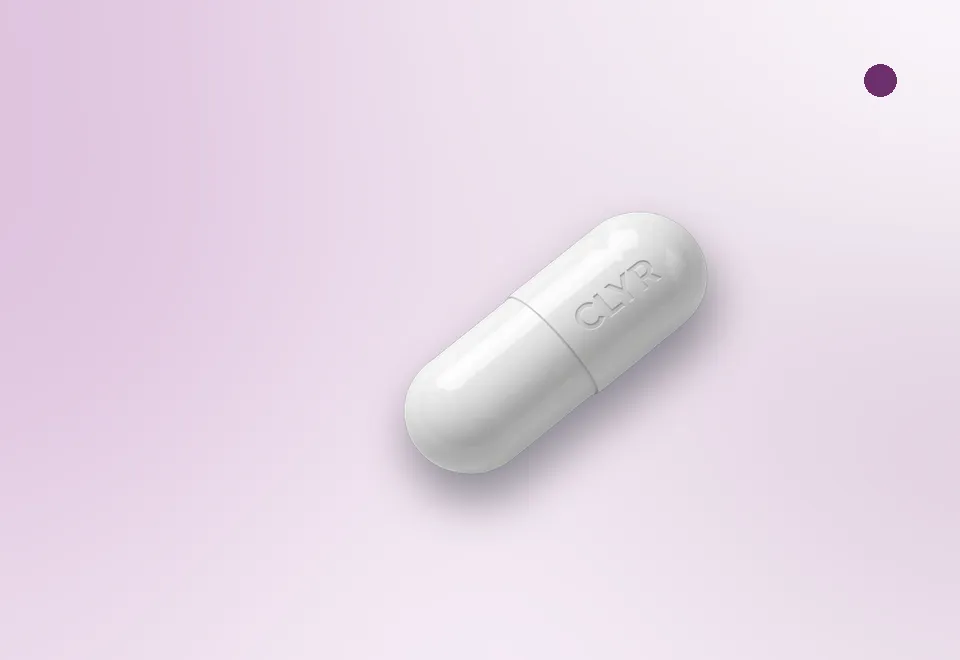
Ask CLYR: LDN and the standard FDA-approved 50 mg tablet are the same molecule at very different doses. LDN is compounded into capsules and prescribed off-label without FDA approval at that dose; CLYR offers 4.5 mg. Do not split tablets yourself; a licensed provider decides the dose and form.
Low-dose naltrexone (LDN) and the standard FDA-approved 50 mg naltrexone tablet share a name and a molecule, which causes a lot of confusion. They differ in dose, form, regulatory status and how they are used. This short comparison sets out the differences. For a full introduction to LDN, see what low-dose naltrexone is.
The short answer
Same molecule, different dose, form and status. The standard tablet is a manufactured, FDA-approved product. LDN is a compounded capsule at a small fraction of that dose, prescribed off-label, and not FDA-approved at that dose. CLYR offers LDN as a 4.5 mg capsule.
Side by side
| Low-dose naltrexone (LDN) | Standard FDA-approved 50 mg tablet | |
|---|---|---|
| Dose | A small fraction of 50 mg; reviews describe roughly 1 to 5 mg (CLYR offers 4.5 mg) | 50 mg |
| Form | Capsule made by a licensed compounding pharmacy | Tablet made by a drug manufacturer |
| FDA status | Not FDA-approved at this dose; prescribed off-label | FDA-approved |
| Timing | Often bedtime, set by the provider | As labeled and prescribed |
| How long it is active | Thought to block its receptor for only a few hours (Toljan and Vrooman, 2018) | Designed for longer, steady blockade |
| Who decides | A licensed provider | A licensed provider |
Why the dose may change the effect
The leading hypothesis is that a low dose blocks the receptor naltrexone targets for only a short time, after which the body clears it and may adjust its own endorphin signaling. At the standard dose, the block is meant to be sustained. This idea comes from reviews such as Toljan and Vrooman (2018) and is still being tested. It is a hypothesis, not an established fact, and it is not a promise of any result.
Why you should not split tablets yourself
Cutting or dissolving a 50 mg tablet at home cannot reliably give a precise low dose, and it skips the screening a provider does first. Compounding exists for exactly this reason: a licensed pharmacy prepares capsules at an exact strength to a prescription. Your provider decides the dose and form; the reasoning behind 4.5 mg is in LDN dosing: why 4.5 mg.
Safety that applies at any dose
The core cautions are the same at any dose: liver problems, a known allergy to naltrexone, and certain medicines that cannot be combined with it. In a 2019 meta-analysis of placebo-controlled trials of oral naltrexone across many uses, Bolton and colleagues found no increase in serious adverse events. Side effects specific to LDN studies are covered in LDN side effects, and the full warnings are in the safety section below and in the Important Safety Information.
Getting LDN through CLYR
A licensed provider reviews your screening and decides whether LDN is appropriate for you. If it is prescribed, a state-licensed 503A pharmacy compounds 4.5 mg capsules and ships them to most states and Puerto Rico. At CLYR, low-dose naltrexone 4.5 mg is $119 for 30 capsules or $169 for 90 capsules. Each order is billed once and nothing renews. Provider review and shipping are included, and your provider sets the days of supply. Start on the LDN page.
Frequently asked questions
Is LDN the same drug as naltrexone 50 mg?
It is the same molecule. LDN uses a small fraction of the dose, is made by a compounding pharmacy, and is prescribed off-label. CLYR offers 4.5 mg.
Can I cut a 50 mg tablet to make LDN?
Do not do this on your own. Splitting tablets cannot reliably give a precise low dose. A provider can prescribe compounded capsules at an exact strength.
Why is LDN taken at bedtime?
Many providers suggest bedtime dosing. Your provider sets the timing based on your history and how you respond.
Is the safety screening different at a low dose?
The same core cautions apply, including liver problems, a known allergy to naltrexone, and certain medicines that cannot be combined with it. The full list is in the Important Safety Information.
Important safety information
Compounded low-dose naltrexone is a prescription capsule dispensed only after a licensed provider independently reviews your intake and determines it is appropriate for you. Do not take naltrexone if you take any opioid medicine or have taken one in the last 14 days, including tramadol, codeine, methadone or buprenorphine, because naltrexone blocks them and can cause sudden withdrawal; do not take it if you currently take or need opioid medicines, have liver disease, hepatitis or abnormal liver tests, or are allergic to naltrexone. Tell your provider about kidney disease, pregnancy, breastfeeding or plans for pregnancy, and about every medication and supplement you take. Side effects may include vivid dreams, trouble sleeping, headache, nausea, dizziness or anxiety. Carry a note that you take naltrexone, because opioid pain medicines may not work normally while it is in your system. Compounded medications are made by a licensed U.S. 503A pharmacy to a provider's prescription; they are not FDA-approved and have not been reviewed by the FDA for safety or effectiveness. Individual results vary. Not everyone qualifies. This page is informational and is not medical advice. Call 911 in an emergency.
The same text appears in the Important Safety Information on the LDN page.