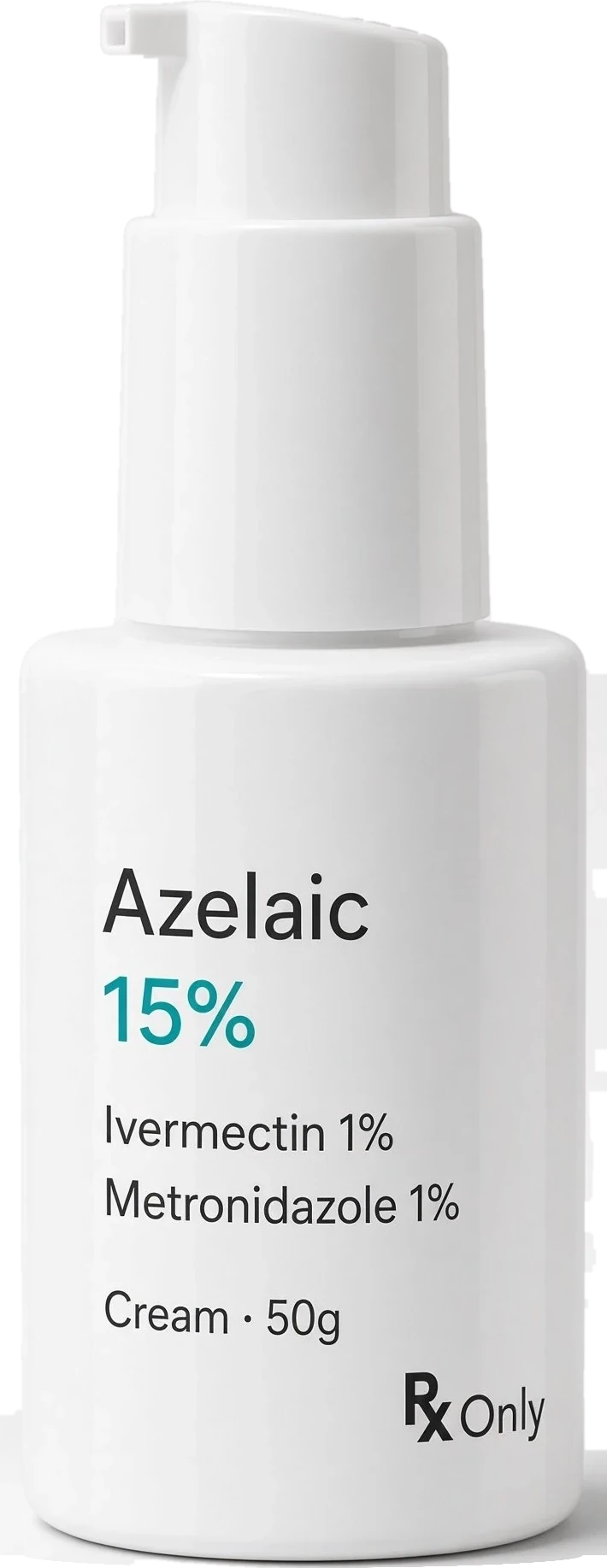
Azelaic acid 15%, ivermectin 1% and metronidazole 1%, three ingredients dermatologists use for the bumps and redness of rosacea, together in one compounded cream you apply to your face once a day. Billed once. Nothing renews.
Check my eligibility$149 for the 50 g pump, shipping included.
Tapping an option just moves you to the right part of this page. It is not a medical assessment. The real questionnaire happens after you pick a plan.
The bumps and redness of rosacea have more than one driver, and each ingredient here works on a different one. All three are used on their own for rosacea; this cream puts them in one step. Every gram carries the same printed strengths.
Each ingredient has been studied on its own as a separate topical; this exact three-in-one cream has not been studied as a finished product, and the approved products are different products. Using azelaic acid for uneven-looking tone is off-label. This is an individually prescribed compounded medication. Compounded medications are not FDA-approved and have not been reviewed by the FDA for safety, effectiveness or quality. Ingredient research does not establish the safety or results of this exact combination.
The bumps of rosacea are linked with two things at once: a crowd of tiny Demodex mites in the follicles, and inflammation you can see as redness. One ingredient goes after the mites; two calm the inflammation.
Everyone has microscopic Demodex mites living in their facial follicles. Skin with rosacea bumps tends to carry more of them, and it reacts with redness and bumps. Ivermectin targets the mites and also calms that reaction, which is why it is used on the inflammatory bumps of rosacea.
Rosacea flare-ups are inflammation you can see: redness, and bumps that come and go. Metronidazole is an anti-inflammatory used on rosacea for decades. Azelaic acid calms the look of redness and bumps, helps keep pores clear and helps even out the look of tone. With steady use, skin looks calmer.
One 50 g pump of the three-in-one cream, shipped in a plain box. You pay once and nothing renews. When you want more, reorder from your portal.
Checkout comes after a short questionnaire, and completing checkout does not guarantee a prescription. If the cream is not a fit for you, you get a full refund. Important safety information
Rosacea changes slowly, in both directions. Knowing what is normal along the way makes it easier to stay with it.
Mild stinging, burning or tingling when you apply it is common early on, and it usually eases as skin adjusts. Burning, irritation or dryness that does not settle may need a change, so tell your care team.
Bumps and redness start to look calmer. This is the earliest point to notice a change; nothing happens overnight.
Studies of these ingredients on their own are usually read at around 12 weeks, so give it about three months of daily use before you decide how it is working for you.
Rosacea is long-term. The look of bumps and redness tends to return when you stop, so ongoing use as prescribed is what keeps skin looking calmer.
Individual results vary. No fixed clearance date or amount of improvement is guaranteed.
Your pharmacy label carries your exact directions. These habits go with them.
This cream is applied to the face once a day, as your prescription directs.
Follow the prescribed amount on the pharmacy label. Ask for measuring instructions rather than assuming that one pump equals a particular weight.
For external use only. Avoid the eyes, the lips and broken skin. This cream is not for the eyes and does not treat ocular rosacea.
Use a gentle routine and talk through sun protection with your care team. Do not add several new active products at once without guidance.
One 50 g pump for $149. The price on this page is the price you pay.
About five minutes online: your skin, your current topicals and medications, pregnancy and allergies. No video call.
They confirm the cream is appropriate for your skin before writing the prescription. Not a fit? You are refunded in full.
Once approved, a state-licensed 503A pharmacy compounds your cream to order and ships it, shipping included. Delivery timing can vary.
One pump. Not three tubes.
Rosacea tends to come and go for years, so the routine that works is the one you keep. Putting three actives in one cream turns three steps into one, once a day.
It can show up as flushing, lasting redness, visible vessels, bumps or eye symptoms, and one cream does not address every feature. This one is aimed at the bumps and the redness that comes with them.
Separate creams mean separate steps and more chances to skip one. One cream, once a day, is a routine that is easier to keep.
Every gram carries azelaic acid 15%, ivermectin 1% and metronidazole 1%. You know exactly what is in it before you start.
Sun, heat, alcohol, spicy food and stress can set off flushing. Noticing your own triggers, and protecting your skin from the sun, is part of the routine too.
Acne, dermatitis and rosacea can look similar, so you may be asked for photos or for an in-person evaluation. The questionnaire also asks about liver or kidney disease and your medications before anything is prescribed.
The outer box carries no product name and no condition anywhere on the label. Neighbors and roommates learn nothing.
Not a pharmacy name, not a product name. Just CLYR Health.
We ship everything at once, at room temperature. No monthly pharmacy runs, no waiting on a refill that should already be there.
CLYR Health is LegitScript certified, treatments are reviewed by licensed providers, and every compounded product comes from a state-licensed pharmacy. The price you see on this page is the price you pay, and when your term ends the next decision is yours.
If your rosacea shows up as bumps along with redness, this three-in-one cream is built for it. If your skin is easily irritated and your concern is redness with uneven-looking tone, the Azelaic + Niacinamide cream is the gentler place to start. Compare all three creams.
The bumps and redness of rosacea, the pattern dermatologists call inflammatory papules and pustules. Rosacea can also involve flushing, visible vessels or eye symptoms, and one cream does not address every feature.
Each works on a different driver. Ivermectin targets the Demodex mites linked with rosacea bumps, metronidazole is an anti-inflammatory long used on rosacea, and azelaic acid calms the look of redness and bumps and helps even out the look of tone.
No. This is a 1% cream applied to the face. It is not the oral ivermectin protocol sold elsewhere on the site, and it is never taken by mouth.
No. It is an individually prescribed compounded cream prepared by a state-licensed 503A pharmacy. Compounded medications are not FDA-approved and have not been reviewed by the FDA for safety, effectiveness or quality. Each ingredient has been studied on its own as a separate topical, and each is used in approved topical rosacea products, which are different products. This exact combination has not been studied as a finished product, and ingredient research does not establish the safety or results of this exact combination.
Mild stinging or tingling in the first weeks is common and usually eases. The first visible calming usually shows around weeks 4 to 8, and studies of the separate ingredients are usually read at about 12 weeks. Individual results vary, and no fixed clearance date or amount of improvement is guaranteed.
The common ones are mild and on the skin: stinging or burning, dryness, itching and mild redness, mostly in the first weeks. Burning, irritation or dryness may require a change, so tell your care team. Stop and get help for significant irritation, a rash or an allergic reaction, and seek urgent care for trouble breathing or swelling of the face or throat.
Keep the rest of your routine gentle and do not add several new active products at once without guidance. If you already use topical steroids or a prescription rosacea medication, say which ones in the questionnaire, and talk through sun protection with your care team.
Once a day on the face, as prescribed. Follow the amount on your pharmacy label and ask for measuring instructions rather than assuming one pump equals a particular weight. Keep it away from the eyes, the lips and broken skin.
Anyone allergic to azelaic acid, ivermectin or metronidazole, and anyone pregnant, planning to become pregnant or breastfeeding. A very sensitive or damaged skin barrier, open wounds on the face, liver or kidney disease, and topical steroids or prescription rosacea medications already in use all need to be discussed first. The questionnaire asks about each of these.
It depends on the amount on your label and the beyond-use date the pharmacy sets. Follow the supplied storage instructions, and do not assume another product’s storage rules apply. Check the label for your name, the medication and the strength, and contact the care team before use if anything differs. The pump on this page is an illustration; pharmacy packaging may vary.
No. The 50 g pump is billed once. When you want more, request your next fill from your patient portal.
About five minutes online, and no card needed to finish the questionnaire.
Check my eligibilityAzelaic Acid 15% / Ivermectin 1% / Metronidazole 1% Cream is a prescription compounded medication, dispensed only after a licensed provider independently reviews your intake and determines it is appropriate for you; completing checkout does not guarantee a prescription. For external use on the face only. Avoid the eyes, lips, nostrils and broken skin. This cream is not for the eyes and does not treat ocular rosacea. Rosacea may involve bumps, flushing, visible vessels or eye symptoms, and one cream does not address every feature; mention painful or gritty eyes, vision changes and worsening redness so your provider can guide further care. Acne, dermatitis and rosacea can look similar; your clinician may ask for photos or recommend an in-person evaluation. Follow the prescribed amount on the pharmacy label and ask for measuring instructions rather than assuming that one pump equals a particular weight. Common side effects include stinging or burning, dryness, itching and mild redness, usually in the first weeks; burning, irritation or dryness may require a change. Stop and contact your provider for significant irritation, rash or an allergic reaction. Seek urgent care for trouble breathing or swelling of the face or throat. Tell your provider about allergies to any ingredient, pregnancy or breastfeeding, liver or kidney disease, other prescriptions and neurological symptoms. Keep your follow-up. Using azelaic acid for uneven-looking tone is off-label. This is an individually prescribed compounded medication. Compounded medications are not FDA-approved and have not been reviewed by the FDA for safety, effectiveness or quality. Ingredient research does not establish the safety or results of this exact combination. This information supports a conversation with your clinician and does not replace your prescription or the full medication information. Individual results vary. Call 911 for an emergency.